POSfeatures
POS Loyalty Program Software for Customer Rewards
Content type
Features
Topic
POS
Content type
Features
Topic
POS
Published
Keywords
Building long-term customer relationships is important for businesses that depend on repeat purchases. A customer who has a positive experience and receives meaningful benefits from continuing to shop with a business is more likely to return.
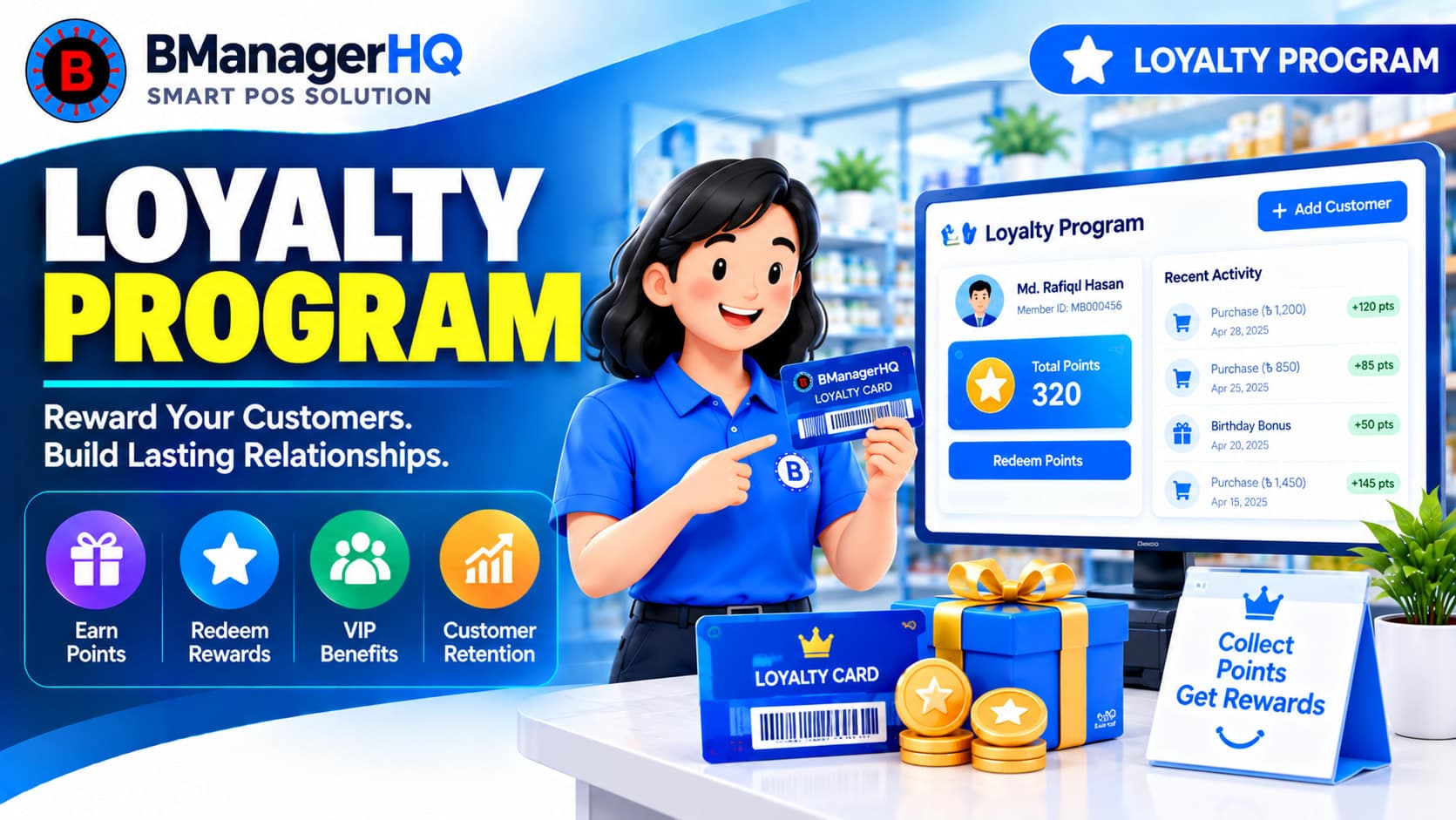
BManagerHQ POS Loyalty Program Software helps businesses manage customer loyalty alongside their POS sales and customer management operations. Connect customer information with purchases, rewards, loyalty activities, and related customer engagement processes from one platform.
With BManagerHQ, businesses can organize loyalty management together with customer management, membership cards, promotions, sales tracking, and other POS operations.
This makes loyalty management particularly useful for retail businesses that want to encourage repeat purchases and maintain stronger relationships with their regular customers.
What Is a Loyalty Program?
A loyalty program is a structured approach businesses use to encourage customers to continue purchasing from them. A business may provide loyalty-related benefits based on customer activity, membership, promotions, or other business-defined rules.
BManagerHQ brings loyalty management into the POS workflow, allowing businesses to manage customer loyalty alongside sales and customer records. The purpose is not simply to increase one transaction. A well-organized loyalty strategy focuses on building a relationship with customers over multiple purchases. For example, a retail store may want to recognize customers who regularly purchase from the business and provide appropriate loyalty benefits as part of its customer engagement strategy.
How POS Loyalty Program Management Works
POS loyalty program management connects customer information and purchasing activity with loyalty-related activities. With BManagerHQ, businesses can manage customer information alongside sales, membership information, loyalty-related activity, and promotions.
A typical customer relationship can be organized around:
Customer → Purchase → Customer Record → Loyalty Activity → Future Purchase
This approach keeps loyalty management connected to the customer's broader sales and customer-management history instead of treating loyalty as a separate process.
Explore How to Setup Loyalty Program Documentation
BManagerHQ Loyalty Program Management helps businesses organize customer rewards, points, benefits, and loyalty-related activity alongside their broader customer and POS operations.
Businesses can use this information as part of their customer loyalty strategy, helping teams maintain a clearer view of customer activity and ongoing engagement.
Customer loyalty is closely connected with sales. Every customer transaction provides an opportunity to understand purchasing activity and build a stronger relationship with the customer.
With BManagerHQ, loyalty management can be considered alongside:
This creates a more connected environment for businesses managing customer relationships and sales operations.
Learn more about Customer Management.
A POS loyalty workflow can bring customer and sales information together with loyalty-related activities. When customer information is connected with purchasing activity, businesses can maintain loyalty information as part of the same broader operational process.
This makes loyalty management relevant to businesses that want to manage repeat customers while continuing to use their POS for everyday sales operations.
A loyalty program becomes more useful when customer information is organized properly. Instead of maintaining customer information in separate spreadsheets or notebooks, businesses can manage customers through their POS system. Customer records can be associated with their broader purchasing activities, allowing businesses to maintain an organized view of customer relationships.
For example, a regular customer may have:
This provides a more structured foundation for customer retention activities.
Customer loyalty management becomes more useful when loyalty-related activity can be considered alongside customer purchase history. A customer's profile, sales history, membership information, and loyalty-related activity can provide a more organized view of the customer relationship.
For businesses with regular customers, this helps connect ongoing customer activity with the sales operations already managed through the POS system.
Loyalty programs and membership cards often work well together. A business can use membership functionality to identify regular customers while using loyalty activities as part of its broader customer-retention strategy.
For example:
Customer → Membership → Purchases → Loyalty Activity
This creates a connected customer journey instead of treating each function as an isolated feature. BManagerHQ also provides Membership Card Management for businesses that want to organize customer membership functionality.
One of the main purposes of customer loyalty programs is encouraging customers to return. For businesses such as retail shops, grocery stores, fashion stores, pharmacies, and electronics shops, repeat customers can be an important part of ongoing sales.
A loyalty strategy can help businesses create reasons for customers to continue purchasing from the same business. Instead of focusing only on acquiring new customers, businesses can also build processes around maintaining relationships with existing customers.
Loyalty management can also work alongside promotional activities. For example, a business may run a promotion for its regular customers while separately managing its broader loyalty program.
These functions serve different purposes:
Promotions are generally designed around specific sales offers, products, or purchasing conditions.
Loyalty programs focus more broadly on encouraging ongoing customer engagement and repeat purchases.
Using both approaches allows businesses to create a broader customer engagement strategy.
Learn more about Promotion Management.
POS Loyalty Program Software for Different Businesses
Different businesses can use loyalty programs in different ways.
Fashion & Clothing Stores
Regular customers may purchase clothing multiple times throughout the year. Loyalty activities can help businesses maintain relationships with returning customers.
Encourage repeat purchases by organizing customer loyalty alongside everyday POS sales.
Grocery & Retail Stores
Frequent purchases make customer retention particularly relevant for everyday retail businesses.
Pharmacy Businesses
Customers may return regularly for their recurring purchases. Organized customer and loyalty management can help businesses maintain customer relationships.
Electronics & Mobile Shops
Businesses can use customer management and loyalty activities to maintain relationships beyond individual purchases.
Cosmetics & Lifestyle Stores
Regular customers can be managed through a combination of customer profiles, memberships, promotions, and loyalty activities.
A small business may initially manage regular customers manually. As the customer base grows, however, manual tracking becomes increasingly difficult.
Businesses may have:
At this stage, a structured POS system can help bring customer and sales activities into one environment. BManagerHQ provides a broader platform where customer management, sales, products, inventory, memberships, promotions, and loyalty activities can work together.
Businesses operating multiple shops or branches may need to manage customer relationships across different locations.
For example, a business could operate:
Customers may interact with the business at different locations. A centralized business management system can make it easier to manage customer-related activities as the business expands.
This is especially relevant for businesses that want to maintain a consistent customer experience across their locations.
Explore Multi-Location Management.
Customer sales history can provide valuable context for customer relationship management. When customer transactions are organized, businesses can better understand their relationship with individual customers.
For example, a customer may have multiple purchases recorded over time. Instead of looking at every sale as an isolated transaction, the business can maintain the customer's broader sales history and use that information alongside its loyalty and membership activities.
Learn more about Sales & Customer Credit Tracking.
A structured loyalty program can help businesses encourage customers to return.
Keep customer loyalty activities connected with customer information.
Build customer engagement around ongoing purchasing relationships rather than individual transactions.
Combine loyalty activities with membership card functionality.
Use loyalty programs alongside promotional offers as part of a broader customer engagement strategy.
A centralized system becomes increasingly useful as customer numbers and sales locations increase.
Manage customer-related activities alongside the business's POS workflow.
Consider a clothing store with many returning customers. A customer regularly purchases products from the store. The business maintains the customer's information and membership details through its POS system.
The business can then use its loyalty strategy to encourage the customer to continue purchasing from the store. The important point is that customer information, sales activity, membership, promotions, and loyalty management can be considered together rather than being maintained through completely separate systems.
A grocery store may have customers who visit frequently throughout the month. The business can maintain customer information and sales activity while using its loyalty strategy to encourage continued engagement.
This can be particularly useful for businesses where customers make frequent purchases.
A typical customer loyalty workflow can be organized around these steps:
Maintain customer records through the POS system.
Use membership functionality where appropriate.
Step 3 — Track Sales Activity
Customer purchases become part of the broader sales history.
Apply the business's loyalty strategy according to its configured approach.
Step 5 — Combine With Promotions
Use promotional offers alongside loyalty activities where appropriate.
Use the overall customer management workflow to support repeat business.
Loyalty management works best when it is connected to other parts of the business.
Customer Management
Maintain customer profiles and customer-related information.
Sales & Customer Credit Tracking
Keep sales and customer payment activity organized.
Membership Card Management
Manage customer membership functionality.
Promotion Management
Create promotional offers alongside customer engagement activities.
Product & Variant Management
Organize the products customers purchase.
Multi-Location Management
Manage broader business operations across multiple locations.
Together, these capabilities provide a more connected approach to managing customer relationships.
A loyalty program may be useful for businesses that depend on repeat customers, including:
The appropriate loyalty strategy depends on the business model, customer behavior, and promotional approach.
Customer retention is an ongoing process. Managing customers, sales, memberships, promotions, and loyalty activities together can help businesses maintain a more organized customer-management workflow.
With BManagerHQ Loyalty Program Management, businesses can incorporate customer loyalty into their broader POS operations and connect it with customer management, membership functionality, sales, and promotions.
Reward repeat customers and encourage long-term engagement with a loyalty program designed around your business. With BManagerHQ Loyalty Program Management, you can track customer rewards, points, benefits, and activity while giving your team the tools to deliver a better customer experience.
Start your 30-day free trial — no payment required.
Explore BManagerHQ Point of Sale (POS) Feature and turn repeat purchases into lasting relationships.
Loyalty Program Management helps businesses organize customer loyalty activities alongside their POS, customer, membership, and sales operations.
A POS system already manages customer and sales activity. Connecting loyalty management with these operations can provide a more organized way to manage ongoing customer relationships.
Yes. Customer Management provides the foundation for organizing customer information, while loyalty activities can be managed as part of the broader customer relationship.
Yes. Membership cards and loyalty programs can complement each other. Membership functionality can help identify customers while loyalty activities support ongoing customer engagement.
Yes. Promotions and loyalty programs can serve different purposes and can be used together as part of a broader customer engagement strategy.
Yes. Retail businesses with regular or repeat customers can benefit from a structured approach to customer loyalty.
BManagerHQ supports broader multi-location business management, making the platform suitable for businesses operating multiple shops, branches, and warehouses.
Spare parts inventory management software in Bangladesh for products, suppliers, customers, warehouses, stock transfers, credit, payments, ledgers and reports.

Track cashier sessions, drawer notes, cash movements, and POS operations with BManagerHQ. Maintain organized cashier records for daily retail operations.
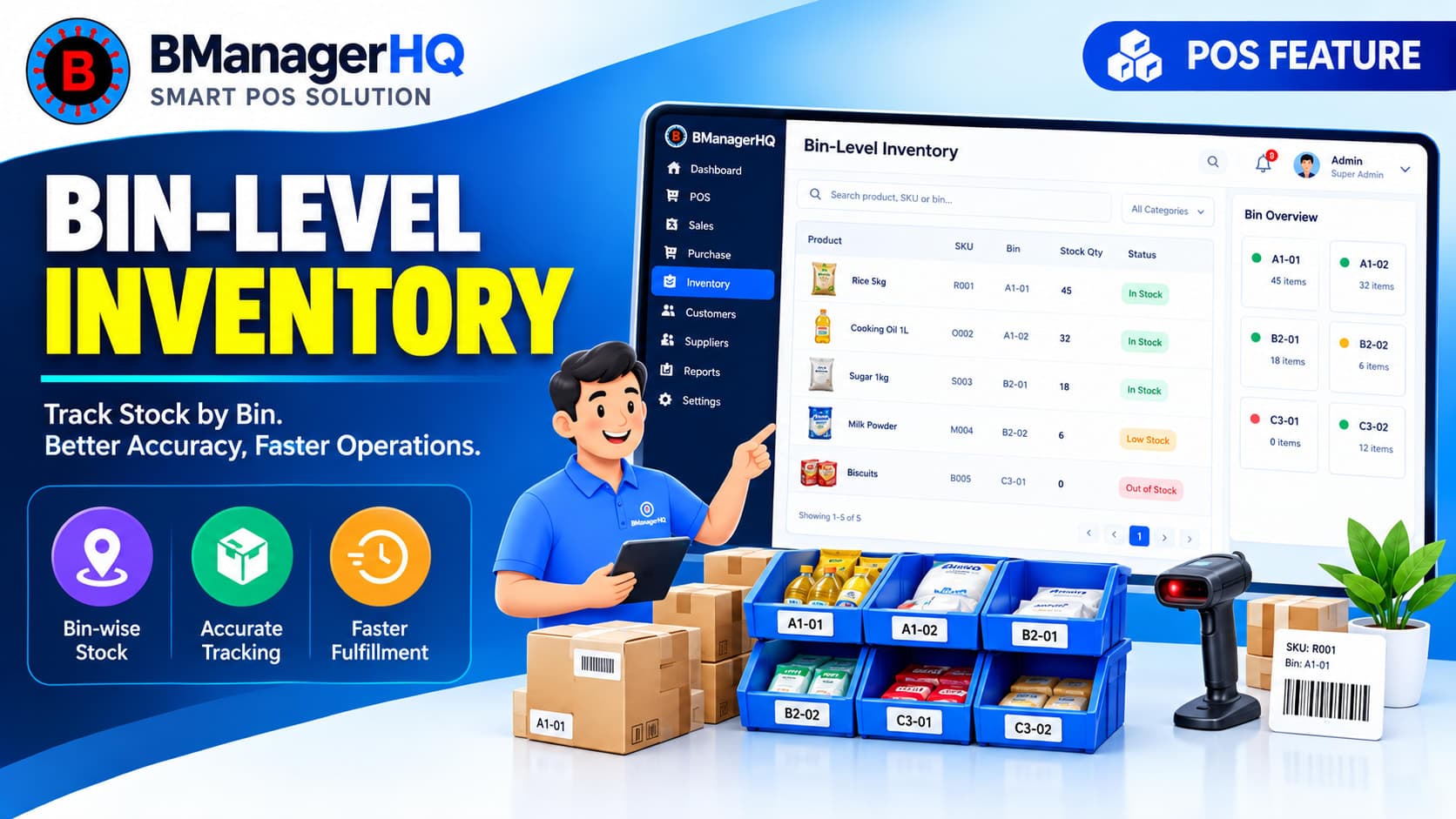
Organize warehouse inventory by bin and storage location with BManagerHQ. Find products faster, manage stock accurately, and improve warehouse operations.
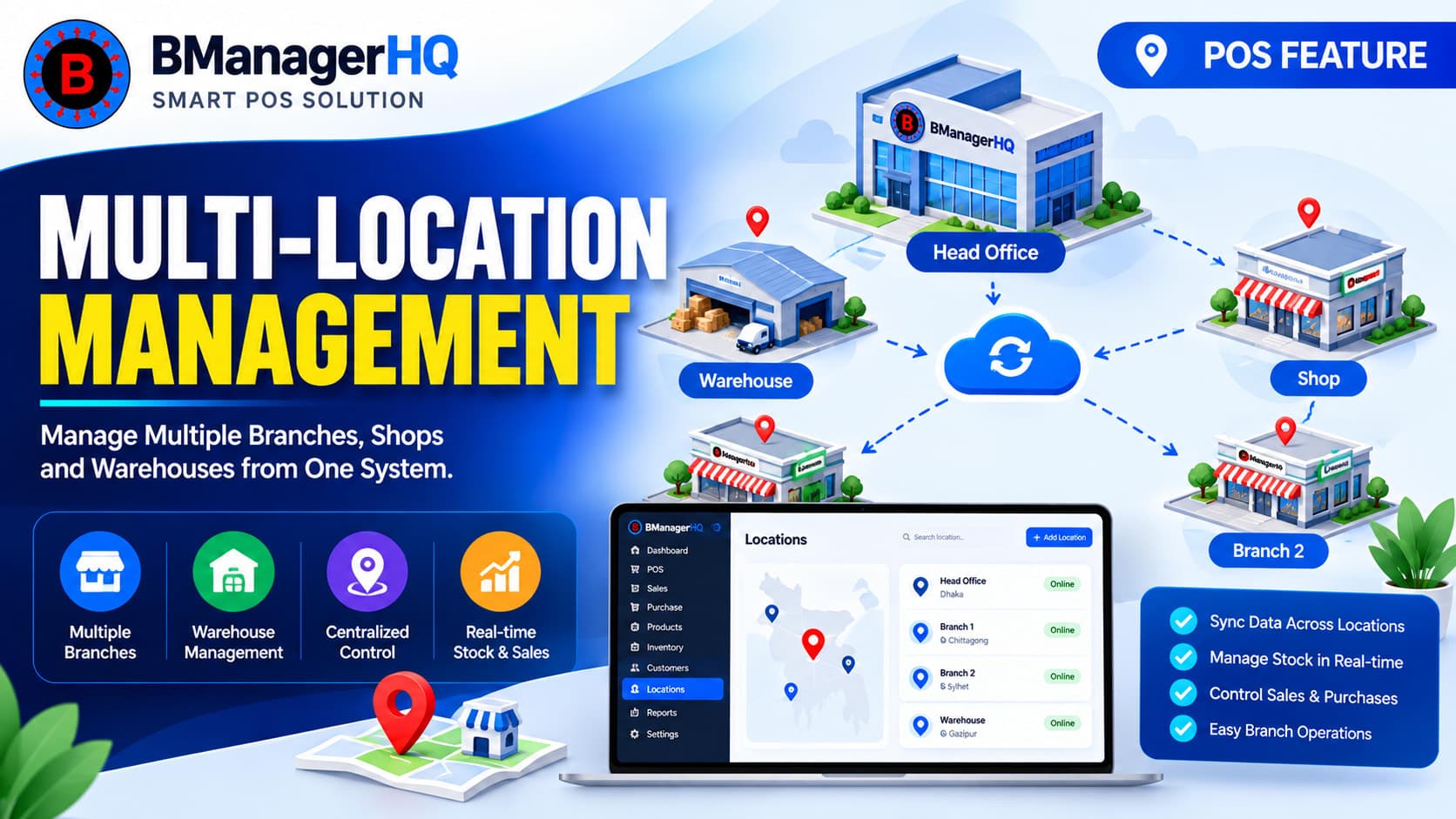
Manage multiple warehouses, shops, and branches from one POS system. Track products, stock, sales, and transfers across locations with BManagerHQ.
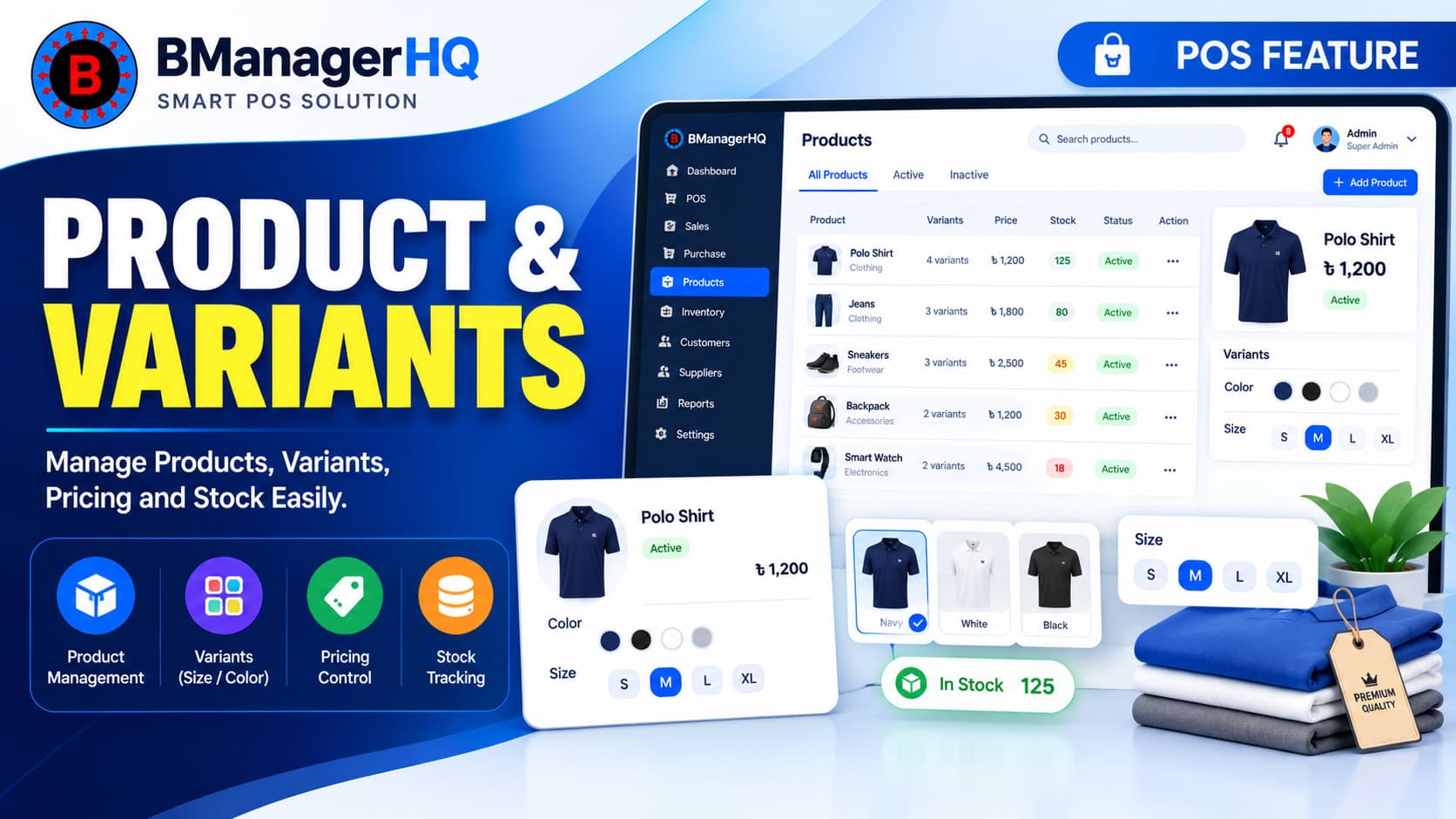
Manage products, variants, pricing, stock, and product information with BManagerHQ POS software. Organize your product catalog for faster sales and inventory management.
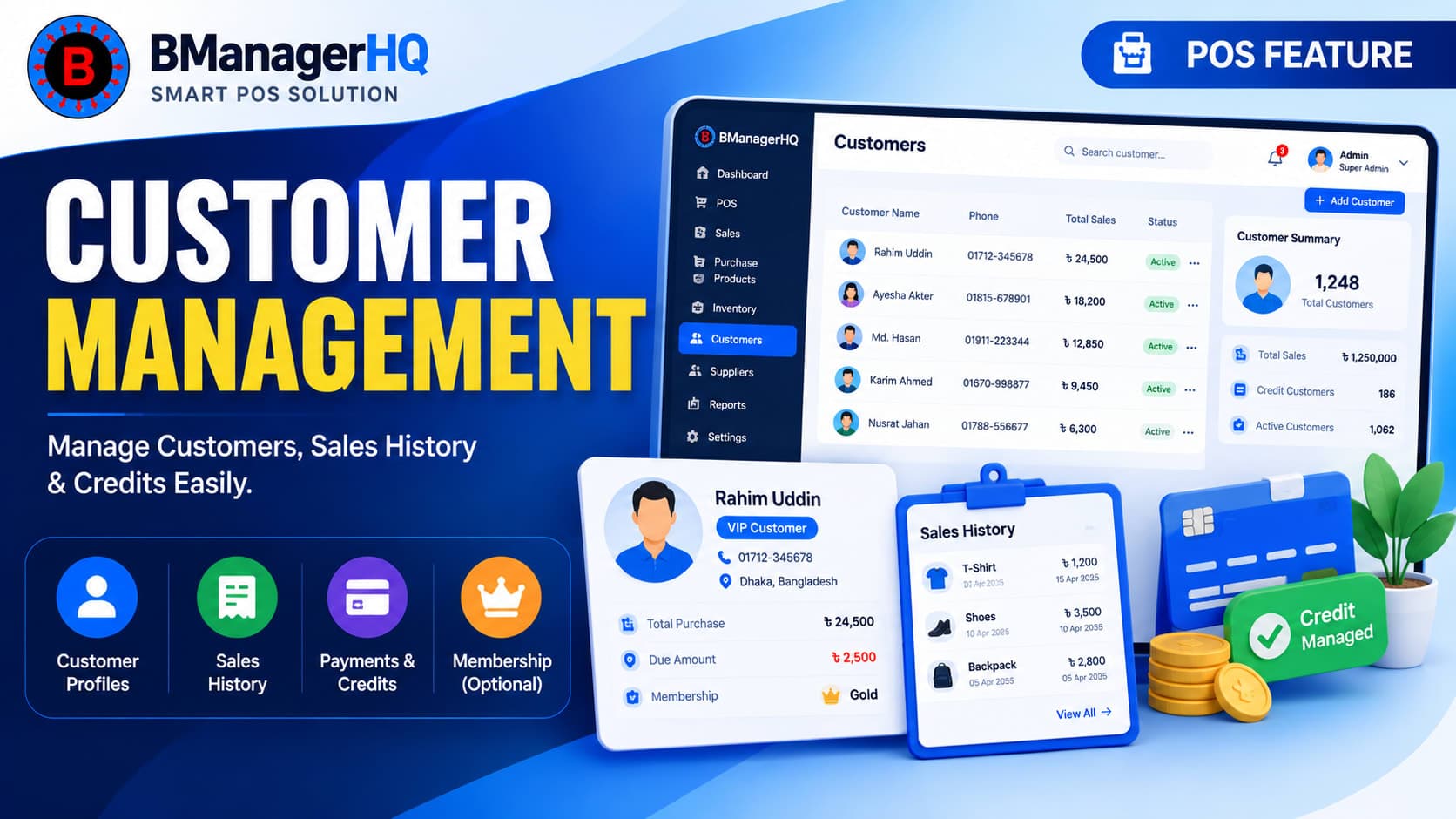
Manage customer profiles, sales history, payments, credit balances, memberships, and customer transactions with BManagerHQ POS software.